MAB Faculty
The Master of Agribusiness (MAB) program brings together internationally recognized Kansas State University faculty who combine academic excellence, industry expertise and a passion for teaching. With strong connections across the food, agriculture and animal health industries, our faculty bring real-world perspectives and practical insights into the classroom. Many have earned national, regional and university teaching awards, reflecting their commitment to student success. Their diverse backgrounds, research and professional experiences help students connect business concepts to the challenges and opportunities facing today's global agribusiness industry.
|
Dr. Amanor-Boadu uses his experience from industry and expertise in strategic management to help students understand the concepts and tools he presents. He encourages students to apply these concepts and tools to their daily business challenges to enhance their relevance and personalize the learning experience. |
|
Dr. Bergtold demonstrates the power of today’s software packages to students, allowing them to solve complex problems in the workplace. Student project work from the course has been implemented widely by MAB students and their companies. Dr. Bergtold won the AAEA Distinguished Teaching Award for Less than Ten Years’ Experience. |
|
This course applies economic principles to firm strategy. Economic concepts that are covered include market forces, demand, supply, individual consumer and firm behavior, and market structure. Economic tools and models are related to business strategies and real-world decision making throughout the course. Firm strategies that economic concepts are applied to include firm boundaries and cost structure, market and firm competition, strategic positioning, and internal organization. |
|
Dr. Britton blends industry and academic experience to provide a course that examines the management of the flow of goods between the point of origin and the point of consumption with the objective of creating net value and building a competitive infrastructure for food and agribusiness firms. |
|
Dr. Featherstone uses his expertise in finance to aid students in understanding the tools of finance and applying them to the firm. His experience lecturing internationally helps him address financial issues under various political and economic systems. He has received the American Agricultural Economics Association’s most prestigious graduate teaching award and its Quality of Communication Award. |
|
Econometrics applies statistical methods to economic and business data to explain relationships and forecast outcomes. This course prepares you to work on both sides of econometric analysis: as |
|
Dr. Parcell uses his 25 years of experience with risk management and policy solutions to help students identify strategic opportunities for businesses and individuals to become innovative, resilient, and profitable. His teaching style focuses on using systems design to model decision processes, providing solutions for agency-level questions. |
|
Dr. Shanoyan uses a combination of theory and real-world examples to help students understand marketing and sales principles and practices in the complex world of animal health industry. The emphasis is placed on learning through applied problem-solving activities. |
|
Dr. Swilley utilizes a variety of experiential and reflective exercises to make the link between theoretical concepts discussed in the course and the application of that material in the student’s organization. An emphasis is placed on managerial relevancy through readings and class discussions involving the latest in marketing strategy. Her course examines issues associated with buyer behavior, customer satisfaction and value, product positioning, advertising and promotion, branding and competitive analysis. |
|
Many business courses focus on specific technical functions, such as accounting or marketing, which can be critical to organizational success. However, a lot of organizations fail even when their employees possess adequate technical skills. What is missing is often the ability to deal effectively with other people. In Behavioral Management Theory, students will learn about the people side of organizations. Specifically, this course will focus on gaining a better understanding of the behavior of individuals and groups within organizations. A great deal of emphasis will be placed on improving the skills needed to help manage others and your own career. |
|
Computer Decision Tools for Agribusiness teaches you to create commonly-used business spreadsheets using Microsoft Excel. The course is a collection of problem sets to create spreadsheets that solve real-life business problems. In the course the most useful features and commands that have the potential to transform data into information with value for decision making are discussed. |
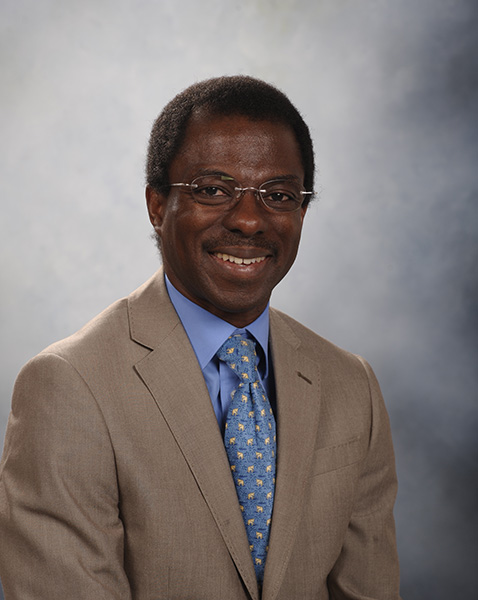 Dr. Vincent Amanor-Boadu
  Dr. Jason Bergtold
  Dr. Brady Brewer
 Dr. Logan Britton
 Dr. Allen Featherstone
 Dr. Terry Griffin
 Dr. Joe Parcell
 Dr. Aleksan (Alex) Shanoyan
  Dr. Esther Swilley
  Dr. Bill Turnley
  Dr. Elizabeth Yeager